
Flanged fittings are better than ferrules for Alpkem, Perstorp or OI Analytical Autoanalyzers

October 15th, 2009

Flanged fittings are better than ferrules for Alpkem, Perstorp or OI Analytical Autoanalyzers


Autoanalyzers vary by manufacturers on what type of fittings they use to secure tubing into the reaction manifold as well as the other various fittings on the system.  Some just use sleeves where the tubing simply slides over a nipple or some kind of connector.  This does not create a very good seal and shouldn’t be used for anything but reagents since sample can be caught in this loose fitting causing tailing or poorly shaped peaks.  Others use a nut and ferrule where the nut is placed on the tubing and then a ferrule is slid onto tubing and when the nut is tightened into the receptacle the ferrule compresses to form a seal.  The ferrule material is designed to be softer material so that it compresses to form a seal when tightened.  The problem with ferrules is that they inevitably get too compressed and if not immediately definitely after several tightenings until the opening at the end of the tubing is quite small, usually much smaller than the ID of the tubing itself.  This point of restriction sooner or later will cause flow issues such as surging and clogs which can affect peak shape and reproducibility.  I have previously discussed the advantage of Teflon tubing but in this writing I want to focus on the connections which in this case are an alternative to nut and ferrules – known as flanged fittings.  Flanged fittings use a similar nut as with a ferrule but the connection is made with an o-ring and a melted or compressed ring of the tubing at its end.  When the nut is tightened down the ring is pressed against the end by an o-ring that compresses.  With a flanged fitting over tightening is not an issue since once the o-ring is compressed the seal is perfect without occluding any of the tubing, leaving the entire opening of the tubing intact for proper flow of solutions.  When it is removed the o-ring returns to its original shape and the o-ring material is impervious to any chemicals that may come into contact and at that point it can be screwed back into the opening as many times as required without damaging or limiting the life of the fittings. Where as a ferrule realistically can only be “tightened” down once or twice before it loses all ability to compress and form a seal.  After a few times then when it is screwed back in it must be tightened more and more to form a complete seal which invariably decreases the size of the opening at the tube end and restricts proper flow of solutions through the connection.  At this point in the life of a ferrule since it can no longer form a good seal sometimes operators will turn to a pair of pliers to tighten even further since leaking is still occurring which will only lead to possibly catastrophic clogs and ironically still not stop the leaking since the ferrule is compressed beyond its ability to seal. Sometimes this over tightening response can lead to considerable damage to the manifold such as cracking at the nut port.  I will even see operators put Teflon tape on the nut to stop the leaking.  All of this because a ferrule that is compressed too much is being used well beyond its life expectancy, the only answer is to regularly changed ferrules and never use them twice.  But they are not cheap and they must be replaced regularly and even when new can cause problems, especially if the nut has to be removed even semi-regularly.  When a flanged fitting tightens down it does not interfere with the inner dimensions of the tubing path, it seals by a gasket not a constriction that the ferrules uses to keep leaking from occurring.  A flanged fitting can potentially last forever, although the tubing may need to be replaced before the fittings would wear out.  But the o-ring and the nut itself can be reused over and over; all that is required is new tubing and the device that forms the flanged fittings.  I regularly convert chemistry manifolds over to teflon tubing and flanged fittings and most often see significant improvements in flow, sensitivity, peak shape and reproducibility.  Initially there is not really much more cost involved since like I said ferrules are not cheap anyway.  If you have any questions about this please feel free to contact us and we can talk about these issues in more depth as they relate to your specific laboratory settings.


Teflon Tubing for Alpkem and OI Analytical Autoanalyzers

September 22nd, 2009

teflon-tubing-assemblies


In this ongoing discussion of the various aspects of a flow analyzer I will focus on tubing and the next writing in this series will be about the related fittings for this tubing.  When Perstorp bought Alpkem way back when they radically changed the platform and created the Expanded Range (ER) detector which to this day is arguably the best Autoanalyzer detector ever made.  In combination they added their type of tubing and mixing blocks which together instantly created a very powerful tool for all types of laboratory analysis using an autoanalyzer.  They primarily used Teflon and flanged fittings as well as acrylic and PEEK mixing blocks.  Over the years since Alpkem was bought by OI Analytical the original configuration of tubing that made the platform so powerful has degraded considerably.  Most of these flow systems now have an inconsistent mixture of tubing such as EVA, PE and PEEK as well as a variety of IDs and further ferrules instead of flanged fittings.  This creates a series of problems from surging due to inconsistent flow interruptions, potential for easy blockage, to chemical degradation and buildup on the tubing from reagents.  For instance PEEK tubing when used on a very hot heater gets very brittle over time and ends up leaking hot reagents all over the place including the heater electronics.  Needless to say this is expensive and leads to an expensive replacement of the heater.  But Teflon has a higher melting point, more inert and is more lubricous and in fact PEEK can be dissolved with sulfuric acid which is commonly used in Phosphate and TKN analysis.  As Perstorp initially configured these systems we have been placing Teflon on the Alpkem and OI Analytical heaters when we repair them and perform PMs on flow systems for years now and have not seen one leak occur and in fact see much better flow dynamics and a greater resistance to chemical buildup from reagents.  Along these same lines, when we have rebuilt Alpkem and OI Analytical heaters with Teflon customers have seen dramatically improved flow dynamics on low level analysis cartridges such as Phosphate or Ammonia.  These improvements are greatest when all the tubing on the cartridge (as well as the heater) is replaced with flanged Teflon tubing.  Look for the discussion on this aspect of the system next week.  Here are a couple links that detail Teflon, the first is an overall discussion of Teflon and the other is a simple table showing its technical properties.  Basically teflon tubing lasts longer, does not need ferrules when used with a flanged fitting, and when the entire system is configured with the same ID teflon the flow dynamics are dramatically improved and produced lower level results as well as longer lasting tubing configuration.  Thank you for taking the time to read this, please contact us if you have any questions or need more details.

Surfactants: Pennies a drop but very important

July 23rd, 2009


 Dowfax 2A1

Surfactants: Just pennies a drop but very important!

Buy Brij-35 Now  $26

Buy Dowfax 2A1 Now $26


Used to help liquids flow through autoanalyzer tubing easier and to help facilitate mixing, surfactant is a necessity for flow analyzers.  It has been used for many years since autoanalyzers were constructed and comes in many varieties but I prefer basic Brij-35 and Dowfax 2A1.  These two tried and true surfactants were the mainstay for nearly all the Alpkem methods when they were developed for their “new” expanded range (ER) detector back in the 90s.


Good surfactants can be hard to find in this day when suppliers tend to outsource everything leading to a loss of control over quality since someone else produces their products.  Make sure your supplier is a trusted source that has an active involvement in the production and QC oversight of the surfactant they provide.


I am always surprised at how miserly operators are in the amount of surfactant they use in their reagents.  Too little surfactant can seriously degrade performance of an autoanalyzer:  The peak shape can be bad as well as poor reproducibility.  Too much only can possibly contribute a slight increase in noise to the baseline, if at all.  The affects of too little Brij or Dowfax can be catastrophic but using too much is rarely even apparent. 


I also strongly suggest only putting surfactant in the container used on a daily basis.  If surfactant is put in the stock solutions when they are prepared and stored for any length of time the surfactant starts to break down thus making it less effective and increasingly noisier the longer it sits.


I also suggest not letting the supplies get too old due.  Sometimes labs will buy large amounts to keep in stock in order to save some money but before they can use it up surfactant can go bad.  Like milk for our breakfast cereal, surfactant is best bought often in small amounts and used up while it is fresh.  Surfactant is a very important ingredient to the success of an autoanalyzer and just pennies a milliliter so I do not suggest being spendthrift or stingy on how much you use.  I always like to use at least a milliliter or two per liter of solution, this allows for good flow and does not contribute noise if the surfactant is fresh and from a good clean source.

Brij-35

Flowcells need maintenance.

July 9th, 2009

Flowcell Window 


 PEEK Flowcell


As detailed in last week’s posting by keeping an older autoanalyzer running over time a lab can save considerable amount of money but this does not mean that its operation is free.  An advantage of getting a new piece of equipment, especially a much simpler to operate discrete analyzer, is the massive reduction in operating costs but the buy-in for that savings can be as high as fifty thousand dollars.  If a lab takes a little time and money to keep up a few essentials on an autoanalyzer they can extend the operation as long as possible and insure that it keeps producing easy valid results.  Barring major repairs like auto samplers, circuit boards and such mostly what mostly takes the operational hit of use is the flowpath: tubing, debubblers and flowcells.  Every time an autoanalyzer is run these areas take the direct impact of its operational wear.  In this article I am going to focus on the flowcell, look for subsequent articles on the tubing and surfactants.


Flowcells are used in autoanalyzers whether Segmented Flow Analysis (SFA) sometimes referred to as Continuous Flow Analysis (CFA) or Flow Injection Analysis (FIA).  The purpose of the flowcell is to allow the reagents to flow through a continual cuvette so that the spectrometer can simultaneously shine through the liquid and determine concentration based on the intensity of the color via a photodiode detector..


These same chemicals are very hard on the glass that holds the liquids inside the flowcell.  Ammonia analysis tends to turn the glass yellow and the chemicals used for phosphate tends to turn it blue for example.  Many if not most chemistries have some chemical effect, even if to pit the glass and make it “sticky” for bubbles or diminish the light transparency of the flowcell.


The advantage to the original Alpkem design that OI Analytical continues to use on their current systems is that it can be refurbished in a way that recreates a brand new flowcell without a costly replacement.  Many flowcells in use today are permanent glass flowcells that cannot be refurbished or repaired and in fact have tendencies to break as they age and as they are handled by operators.  The Alpkem design allows for the windows to be removed, cleaned and/or replaced if required without a costly replacement of the entire flowcell.  The seals can also be replaced since they tend to age over time and lose their elasticity.  I also always polish the inside of the pathway to help eliminate bubble sticking as well as clean out the insides of the flowcell surface.  At EZkem a complete refurbishment of a flowcell including all new windows and seals is only $95 instead of $550 for a new flowcell. 

Information Request for Flowcell Refurbishement.


Once this process of refurbishment is complete the flowcells are basically brand new and for a small amount of money able to extend the life of a flow detector for many years of operation. It is a simple and inexpensive way to extend the life of your autoanalyzer so that it continues to put out valid easy results for many years past the so called manufacturer’s stated life span of the instrument.

Autoanalyzer Debubblers need to be replaced

July 2nd, 2009

Acrylic Debubbler

Buy Now $149


Even though discrete analyzers are on the verge of completely replacing auto analyzers there remain many laboratories that successfully use them every day and will most certainly continue to use them for many years.  There are many reasons why people still use them even though in my experience so far the discrete analyzer is a superior way to analyze nearly any sample currently processed with an autoanalyzer.  One thing I do know is that is it often much less expensive and thus more profitable to run an older autoanalyzer as long as possible instead of spending the money for a costly replacement.  If a lab does choose to run an older piece of equipment it is imperative that they spend a little time and money on a few items that will insure easy valid results as long as possible.  Spending a few hundred dollars a year on small critical items instead of tens of thousands to completely replace an older piece of equipment makes sense in these times of financial difficulty. 


By keeping an older autoanalyzer running over time a lab can save considerable amount of money but this does not mean that its operation is free.  An advantage of getting a new piece of equipment, especially a discrete analyzer, is the massive reduction in operating costs but the buy-in for that savings can be as high as fifty thousand dollars.  If a lab takes a little time and money to keep up a few essentials on an autoanalyzer they can extend the operation as long as possible and insure that it keeps producing easy valid results.  Barring major repairs like auto samplers, circuit boards and such mostly what mostly takes the operational hit of use is the flowpath: tubing, debubblers and flowcells.  Every time an autoanalyzer is run these areas take the direct impact of its operational wear.  In this article I am going to focus on the debubbler, look for subsequent articles on the tubing and flowcells.


As the solutions flow through the autoanalyzer system the debubbler is the one little window that we have to judge the condition of the reagents and ultimately the sample.  This is where we see if the bubble patterns are correct, if there is a block in the cartridge causing surging, how well the sample has held together as it traveled through the cartridge, if there is enough surfactant and ultimately if the colorimetric reaction is occurring properly.  This is how we can take out any spurious little bubbles that really don’t matter but without being removed will produce nasty little spike on the result peaks.  A quick and easy little window that the operator only has to casually look at and immediately see the condition of the instrument.


Unfortunately even though debubblers are very important over time they tend to change due to the chemicals flowing through them.  In the case of Ammonia it tends to turn yellow/orange from the nitroferricyanide.  The Orthophosphate chemistry tends to change the surface condition so that you can’t see through the acrylic anymore.  Each chemistry has its own impact, some more some less but the bottom line is that once you cannot see into the debubbler it is now a liability instead of a valuable asset.  Bubbles will stop sliding out easily and the operator has lost the window that so clearly details what is going on with the solutions flowing through the system.  Often undervalued, the condition of the solution flowing through the system almost always gives valuable insight into the problems that invariably sooner or later occur with autoanalyzers.  I always train operators to use the visibility of the debubbler as a tool to understand what is going on so that they can quickly and easily solve issues and produce easy valid results.  Replacing the debubbler is quick and easy and much less expensive in the long run and helps immensely in insuring the successful operation of the autoanalyzer.

Gas Diffusion Modules for AutoAnalyzers

June 23rd, 2009


new-style-gas-diffusion-module

Buy Now


Gas Diffusion Modules are used in autoanalyzers whether Segmented Flow Analysis (SFA) sometimes referred to as Continuous Flow Analysis (CFA) or Flow Injection Analysis (FIA).  The purpose of the gas diffusion module is to function as an in-line cleanup eliminating particulates, potential ionic interferences and chemical complexes.  The target analyte permeates through the membrane into a separate flow path going on to further analysis while all the other components of the stream go off to waste. Without separation these interferences can cause problems with both amperometric and photometric flowcells by disrupting the electronic potential of the target molecule, causing precipitation in the colorimetric reagents, or simply creating problems with large particulates.


Originally Alpkem used a GD Module that had a fairly long path but the width of the path was deep and narrow and utilized a very easy latching lever device to secure the membrane between the diffusion module pieces.  OI Analytical purchased Alpkem just as an amperometric cyanide method was being approved by the EPA; this method originally utilized the same gas diffusion membrane module it had used for years in many types of colorimetric methods.  During that period it became obvious that greater sensitivity was required if analysis below 10ppb cyanide was going to be possible.  Therefore a new module was developed with a shallow but wider surface area path that increased sensitivity by at least 30% or more.  At that time a new acrylic module was produced that incorporated the wider and shallower path development but there were two major differences, the latching device and the material it was made of.  OI Analytical changed the part that secured down the membrane holding assembly to three screws and a plate configuration instead of a simple latch.  They also changed the material it was constructed with to acrylic instead of polysulfone.


The screws created many problems over the years such as rusting, difficulty in quickly securing the membrane between the module pieces without tearing, and stripped screw holes.  There were also problems at the nut inlets but it turns out it was not related to chemical issues of the acrylic material but how the holes were drilled.  Acrylic requires a special drill bit that if not used creates strain on the material thus making the hole not perfectly round.  This problem was obvious since often the softer nuts would strip when being screwed in, which is when OI switched to the harder PEEK nut. Instead of solving the drilling issue using PEEK nuts put great strain on the material thus making it susceptible to cracking.  If the holes are drilled out with a special drill bit this issue does not occur, especially if a softer material is used for the nuts like polypropylene (which is what Alpkem always used). 


Here at EZkem we have produced a Gas Diffusion Module that utilizes the wide path, the simple to use latch device, and acrylic.  We have used these modules on every type of chemical from acids to bases and have seen absolutely no cracking.  The incidence of membrane tearing is solved as well as any leaking.  The best result is of course the greater level of sensitivity that the module produces as well.  The tubing nuts screw in easily and do not cause strain on the material or destroy the nut itself.  Our next paper will be about flanged fittings, which also helps with the cracking issue and with flow dynamics as well, look for this letter in the near future. We hope you will consider our new module on your flow analyzer, thank you.

Discrete Analyzers vs Autanalyzers and EPA Approval

August 29th, 2008


Recently there has been much discussion about whether Discrete Analyzers need a Letter of Approval known as an Alternative Test Procedure (ATP) from the EPA to run the same methods that are approved to be used with Autoanalyzers for the analysis of Waste and drinking water.  To be honest it is hard to understand why anyone would attempt to create a false level of acceptance for Discrete Analyzers considering how explicitly the EPA has stated the contrary.  Here is a quote from the EPA dated April 7, 2007:

“Consequently, under this provision a modification that simply automates an approved Continuous Water Analyzer (CWA) method to add a discrete Analyzer does not require review as an Alternate Test Procedure (ATP). The method becomes like any other method approved under 40 CFR Part 136 that a laboratory chooses to use.”

In light of the EPA’s very clearly positive statement regarding the use of Discrete Analyzers in the laboratory for Waste and Drinking Water analysis it seems the only reason a laboratory would create a specification so false would be ignorance or to place a barrier before some Discrete Analyzer manufacturers. If laboratory or QC managers hadn’t seen  the letter maybe they would not know but most laboratories that are actually complying with EPA regulations and subject to audits tend to be somewhat updated on major issues like this so it is hard for me to believe this could come from ignorance…

But another reason could be that laboratories are attempting to create a specification effectively locking out all other competitors via the bid purchasing process that is designed to eliminate overly costly or poorly designed instruments.  If a laboratory knows that only one manufacturer had these types of letters (even though they are actually useless) they might falsely state that these letters are required by the EPA in order to assure that the Discrete Analyzer Company they prefer wins the bid.    You see in the beginning when Discrete Analyzers were so new that there was no “position” from the EPA many laboratories had to take a tough compliance position, often choosing to remain with the older technology of Autoanalyzers even though they wanted to update their laboratories.  That was understandable at that time and so it was also at the time perceived by some Discrete Analyzer manufacturers that if they obtained these ATP letters they could comply in good conscious to the EPA regulations. 

But just for the record at the time there were also some Discrete Analyzer Manufacturers that recognized the obvious conclusion would be that Discrete Analyzers were as similar to Autoanalyzers as the difference that exists between the many versions of autoanalyzers.  For instance the differences between Alpkem, Lachat and Technicon autoanalyzers were/are so great that how could one in good conscious actually believe a Discrete Analyzer was/is too different to comply with EPA Waste and Drinking Water analysis regulations.   And in fact it is obvious to anyone familiar with the chemistries involved with Autoanalyzers that actually Discrete Analyzers tend to comply much closer to most published EPA methods since the robotic measuring ability tends to be so much more accurate, consistent, and predictable with exact ratios of reagent to sample easily obtainable.   I believe it was always obvious but in the void of a position form the EPA it allowed the Autoanalyzer companies to jump on this weakness in order to drive away the discrete analyzers – yes a sales tactic. 

The reasons that discrete analyzers are so much better can be discussed as a whole other story some other time…  Now, though, the ironic twist is that currently some Discrete Analyzer manufacturers are using the false perception that ATP letters are required to comply with the EPA waste and Drinking water analysis regulations even though the EPA has clearly stated that this is not true. I believe that laboratories are doing this in direct collusion with some Discrete Analyzer companies in order to insure that the laboratory gets the instrument they want while appearing to be following an externally controlled bid process with is specifically designed to NOT have these types of biases affect the outcome.  Don’t get me wrong I have no problem with someone doing all the research they want (or not) and choosing what ever instrument they want for any reason (or no reason).  But if they are going to use the Bid process I believe it is wrong to attempt to circumvent it by placing false barriers before everyone involved so that only their favorite wins.  Just construct the bid process in such a way so that instruments that are too costly or that cannot meet the analytical needs of the laboratories are weeded out and only the best most cost efficient instrument remains for purchase.  Why devise these inaccurate or false specifications only to obtain the instrument they want when the whole purpose of the Bid process is to get the best instrument not just the one they want.  If the one they want is the best instrument then they will be happy with the process if not they should be happy to get the best instrument and thank the process for finding the best instrument that meets all their EPA regulated Waste and Drinking water analysis needs.


Discrete Analyzers and the Bid Process

August 29th, 2008


Now that I am involved in sales related activities of discrete analyzers, as opposed to simply technical work with autoanalyzers I have been forced to interact with analytical laboratories that place their purchasing process in the hands of the bid process.  The purpose of the bid process, as I have been taught from learned sales managers and purchasing experts, is to create a fair and structured process where in the acquisition of laboratory equipment required for their analytical needs can be accomplished. Like I said I have been told that there are many reasons for the creation and implementation of this complex process such as saving money, insuring the best equipment is obtained, and/or eliminating corruption to name a few. 

Saving money seems like a good reason, one that almost anyone can understand and agree with,  especially if that someone is the public who many just be looking at cost as a major parameter for accepting or denying a laboratory its requests for analytical instrumentation.  Obviously, the ability of a laboratory to complete its tasks requires the proper equipment which is why cost alone cannot be a determination of what to purchase and rarely is actually the sole reason for a purchase.  This is a no brainer; how many people have bought something solely on cost and have regretted it later when they realized it could not do what it was originally purchased for even though it cost less money.

So since cost alone is not the main reason for the bid process then lets look at the next reason for the bidding process which is to make sure that the best equipment is acquired thus assuring that the laboratory’s tasks get done as accurately and easily as possible? Since the bid process has multiple components the professional aspect of the operators input will always be subjective and virtually insure that there will be a personal opinion that no structure can mitigate.  So far in my discrete analyzer sales history this is one of the main areas I have experienced incongruities in the behavior of laboratories during their process to acquire instruments.

It seems as if they move quickly from utilizing a process that relies on a combination of cost and equipment functionality to a finalized choice based on subjective reasoning as if they had never used a bid process at all.  With nearly every laboratory using the bid process I observe once they decide what they want they seem to discontinue using any unbiased selection process that will assure them of the best most cost effective equipment.  Even further I have repeatedly seen with almost every bid purchase process the fact that the laboratory already has in their mind what equipment they want before the bid process is put into place or allowed to play itself out.  Which brings me to actually what confuses me the most about the bid process behavior of laboratory operators that utilizes the procedure; why circumvent a process that is designed to produce the best possible equipment for the best price?

Do they have no faith in their ability to understand the needs of the laboratory and construct a bid process that will find the best equipment?  Are they receiving bribes from manufacturers?  Are they so controlling that they cannot let someone or something else make a decision?  What is confusing to me is the fact that they initially establish the ground rules for the process so once the winner is produced it should be what they need so why do they try to circumvent it before, during or after the process has been put into place unless their motives were ultimately affected by some personal gain?  If they just state their needs and publish them everyone will know the playing field and the winner will meet all of these requirements which will be good for the laboratory (as well as the winner).  If they are going to utilize the bid process I hope they let the process work and do not derail it for their own competing and often biased reasons.

Regulatory (EPA) updates regarding Discrete Analyzers

August 18th, 2008


As Autoanalyzers are slowly being replaced by Discrete Analyzers a current issue that remains when deciding between the two are the regulations regarding their use in waste and drinking water laboratory analysis.  In the past Autoanalyzer Manufacturers were required to follow the published EPA methods or obtain a Letter of Approval commonly referred to as an Alternate Test Procedure (ATP).  This allowed a manufacturer to make slight changes in the published method due to specifics relating to their instrument platform.  For instance a method may have been initially approved and published by the EPA using an Alpkem instrument that runs as Segmented flow Analysis (SFA) but another company mainly produces Flow Injection Analysis (FIA) equipment so the FIA company submits paperwork to obtain an ATP that shows their instrument uses the same chemicals, utilizes the same reactions but differs slightly in how the sample is delivered into the reagent stream.  This letter gave certification to a laboratory that their instrument platform complies with the EPA and NPDES regulations regarding waste and drinking water laboratory analysis. 

Although historically very few Autoanalyzer manufacturers obtained these letters all they had to do was run their equipment close to the published method and rarely was there ever an issue since most autoanalyzers are basically the same; pump, autosampler, detector, etc.  But approximately 5 years ago the Discrete Analyzers started to make major inroads into the empire of Autoanalyzers which brought this compliance factor to the forefront when decisions of replacing old equipment were being made.  At first the going was rough for discrete analyzers since there was no precedence and change is often slow in this world especially when regulatory mistakes can be costly.  In other words laboratory and QC managers were reluctant to embrace something new unless they were certain it met all the specifications involved in waste and drinking water laboratory analysis.   In time the EPA began to realize that the Discrete Analyzer is capable of producing the same results as an Autoanalyzer since they use the same chemicals and can be set up to utilize the same types of QC parameters such as ranges, standards, etc.  This led to the release of a series of letters from the EPA that stated their new position on this issue so that  Laboratory and QC managers could replace their antiquated equipment with a clearly superior modern instrument while remaining compliant to EPA regulations.  (EPA Letters Dated Feb 2005 and Feb 2007)

These letters clearly state the EPA’s position which is that the antiquated ATP letters are no longer required.  And further that the EPA believes all discrete analyzers can comply as well as any flow instrument as long as the published NPDES compliant EPA method is followed and further quite specifically that no letters of proof are necessary to be produced from the EPA.  Laboratory validation upon installation is what these regulations refer to NOT the exhaustive pre-validation work by the discrete analyzer manufacturer that the EPA recognizes as overly burdensome.  Further MDL data which was required under the program of Letters of Approval Data is to be simply compared to the EPA data in the form of a table but the implementation is to be proven thoroughly at the time of installation as is clearly spelled out in the reference EPA letters and 40 CFR 136.6.

Discrete Analyzers continue to replace Autoanalyzers

August 18th, 2008

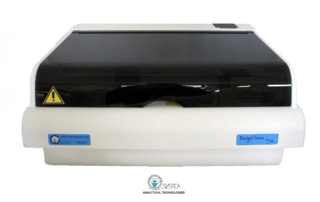
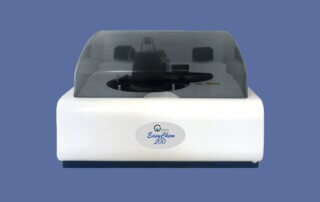
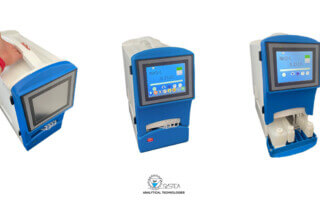
The way laboratories operate and perform analyses is changing. The market is demanding that laboratories become more efficient and reduce overall operating costs. At the same time, less-skilled personnel are more affordable or more available to perform these functions. Liability associated with operating a laboratory and producing quality defensible data has increased. Turnover remains high in positions that perform the most labor-intensive functions. Nowhere is this truer than in the Wet Chemistry departments, where many laboratories are still using manual techniques or outdated Autoanalyzer technology such as segmented flow analysis (SFA) and flow injection analysis (FIA). Several problems exist with Autoanalyzers: lengthy start-up and shutdown times, carryover, hydraulic noise, clogging valves, etc. SFA and FIA analyzers require much more attention during analysis and better-skilled long term personnel to operate. Changing from one method to another can also be very labor intensive. True unattended operation is not really consistently achievable.  The automated discrete analyzer meets the demands of the changing marketplace without compromisingperformance. The discrete analyzer is a flexible instrument, able to perform several different tests all on the same sample, without operator intervention.  Once the system has been set-up and validated in the laboratory the discrete analyzer requires no specific experience to operate, and can be learned by anyone in a matter of minutes. Operation consists of simply loading the sample tray and reagents, selecting the tests to be performed and clicking start.  Even the standard curves can be prepared from stocks which simplify the process even more.  It’s that simple. Very little time is required for start-up or shutdown especially considering that often the unit can be set to run at the end of a shift as the operator is leaving the laboratory. Labor costs are greatly reduced and productivity is increased, enabling technicians to perform other tasks. The discrete analyzers can best be described as robotic systems that perform manual and automated chemistries on a micro scale. The discrete analyzers usually employ a computer-controlled needle connected to a high precision micro syringe for transferring and dispensing precise amounts of sample and reagent. Unlike autoanalyzers which use imprecise tubing and peristaltic pumps to mix reagents and sample.  After being picked up sample and reagents are inserted into a heated reaction cuvette in order to help catalyze the reaction. A proper wash cycle between movements ensures there is no carryover from the previous sample or reagent. Upon completion of incubation, depending on the type of discrete analyzer, the reacted sample is then drawn into a flow cell or read directly through the reaction cuvette at the desired wavelength. 

Costs associated with operating and maintaining a discrete analyzer compared with a Autoanalyzer are greatly reduced. Discrete analyzers have virtually no consumables and require a minimal amount of maintenance, which can be easily performed by the technician. Maintenance consists of replacing a small piece of waste tubing once a week, lubricating a few parts each month, and changing the system’s tubing every six months to a year. The system uses micro quantities, on average 3-500μl/ test, minimizing reagent consumption. Waste generation is dramatically reduced, saving laboratories money and reducing potential liability. Discrete analyzers do all the work. No longer is there any variation in results regardless of who “clicks” start, who the operator is or what kind of day they may be having since the instrument is in control of producing the highest possible data quality.